iLASIK Eye Surgery in Turkey
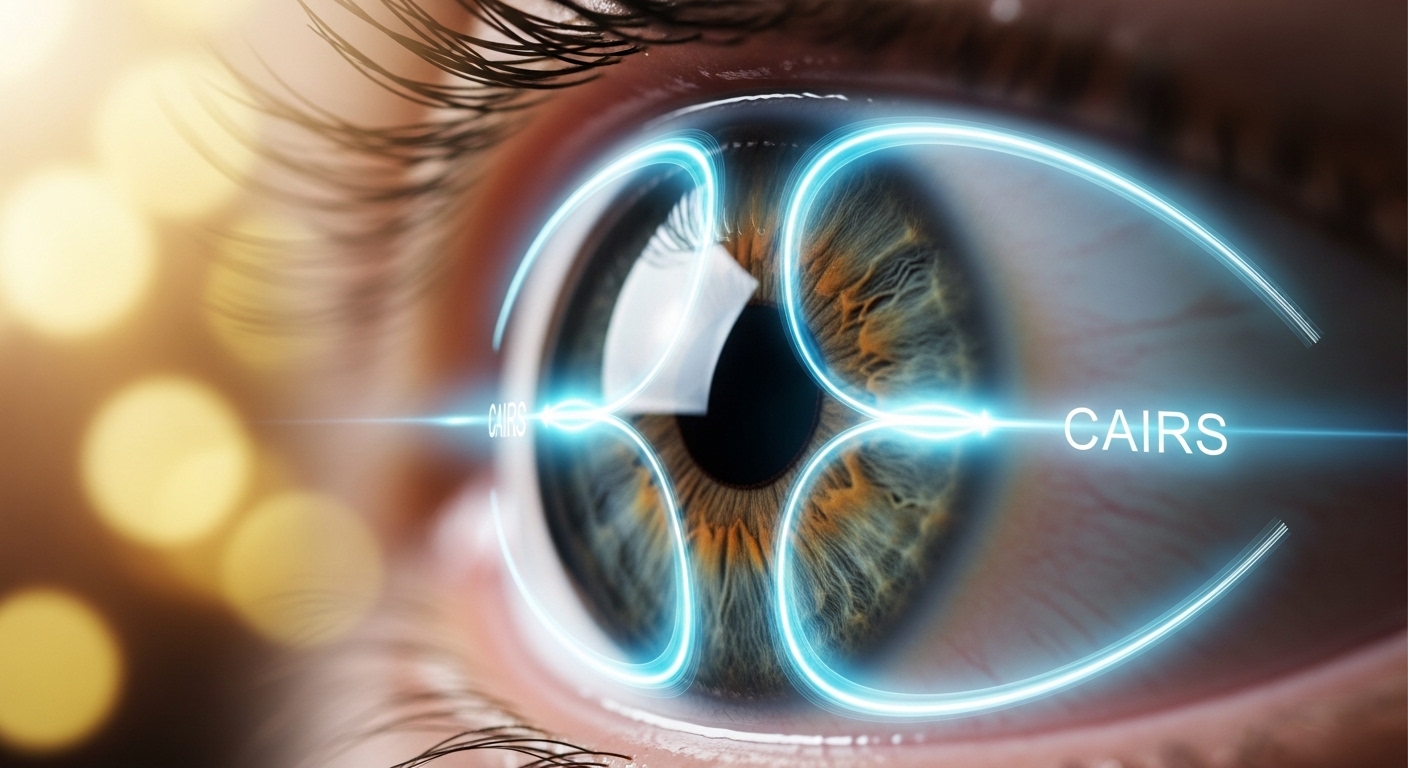
Corneal Allogeneic Intrastromal Ring Segments, known as CAIRS, are used in selected keratoconus cases to help improve the shape and regularity of the cornea. For international patients considering treatment in Turkey, the first step is always a detailed eye examination to understand whether CAIRS may be appropriate and whether it should be considered alone or as part of a broader keratoconus management plan.
Keratoconus is a condition in which the cornea gradually becomes thinner and more irregular, which can lead to blurred vision, light sensitivity and increasing dependence on glasses or contact lenses. In some patients, the main challenge is not only reduced vision but also the difficulty of achieving stable, comfortable visual correction in everyday life.
CAIRS is designed to support corneal reshaping by placing specially prepared donor corneal ring segments within the cornea. The purpose is to improve corneal symmetry in carefully selected patients. Because keratoconus affects every eye differently, treatment planning should always be individual and based on corneal topography, thickness measurements and a full ophthalmic assessment.
CAIRS stands for Corneal Allogeneic Intrastromal Ring Segments. In simple terms, this approach uses biologic ring segments prepared from donor corneal tissue. These segments are inserted into the cornea to help regularise its shape. In clinical practice, CAIRS may be discussed for patients with keratoconus when the aim is to improve corneal geometry and support better visual function, depending on the findings of the examination.
Unlike standard patient-facing laser treatment pages, CAIRS should be explained carefully. It is not a one-size-fits-all solution, and it is not suitable for every patient with keratoconus. A proper decision depends on the stage of the condition, the structure of the cornea, previous treatments, contact lens tolerance and overall eye health.
For patients travelling from the UK or other countries, treatment planning should begin with a structured evaluation rather than with assumptions. At Era Eye Hospital, international patients can be assessed in Ankara and Antalya, depending on their preferred location and travel plan. The goal of the consultation is to understand the condition of the cornea in detail and explain whether CAIRS may be considered within the patient’s personalised treatment pathway.
This type of assessment is especially important in keratoconus because similar symptoms do not always mean the same treatment plan. Some patients may primarily need a diagnostic review and monitoring strategy, while others may wish to discuss interventional options more closely. A clear explanation of findings, suitability and expectations is essential for safe decision-making.
Patients exploring keratoconus treatment in Turkey are often looking for a combination of experienced ophthalmic evaluation, clear communication and travel-friendly care planning. For those visiting Ankara or Antalya, practical factors such as appointment coordination, treatment scheduling and post-examination guidance are also important.
From a patient perspective, the value of travelling for treatment is not only about location. It is also about receiving a careful assessment, understanding the available options and making an informed decision based on the eye’s actual condition. For this reason, informational content about CAIRS should remain realistic and avoid promising the same outcome for every patient.
International patients usually begin with a pre-travel communication process, followed by on-site examination and specialist consultation. If CAIRS is discussed as a possible option, the ophthalmologist will explain the rationale, the suitability criteria and the next steps in a clear and patient-specific way.
Depending on the examination findings, patients may also be advised about related aspects of keratoconus management, including follow-up planning and visual rehabilitation considerations. The main objective is to ensure that the patient understands not only the name of the procedure but also why it may or may not be appropriate in their case.
CAIRS stands for Corneal Allogeneic Intrastromal Ring Segments. It is an approach used in selected keratoconus cases to help improve the shape and regularity of the cornea after a detailed specialist assessment.
No. Keratoconus varies from patient to patient. Whether CAIRS may be considered depends on the corneal structure, examination findings, previous treatment history and the ophthalmologist’s clinical evaluation.
Yes. International patients can be evaluated in Ankara and Antalya. The most suitable location can be planned according to appointment availability and travel preferences.
CAIRS is not presented in the same way as standard refractive laser procedures. It is discussed in the context of keratoconus management and should be assessed through a cornea-focused examination rather than through general laser suitability criteria.
Suitability can only be determined after a comprehensive eye examination that includes corneal measurements and specialist review. A personalised consultation is the correct starting point for any patient considering CAIRS in Turkey.